Marine Tint
Marine tint. Cooler helm, calmer light.
Marine-grade film that cuts heat, glare and UV across helm glass, windows and hardtops — formulated and installed for the sea, not borrowed from cars.
What it is
Heat, glare and UV — cut at the glass.
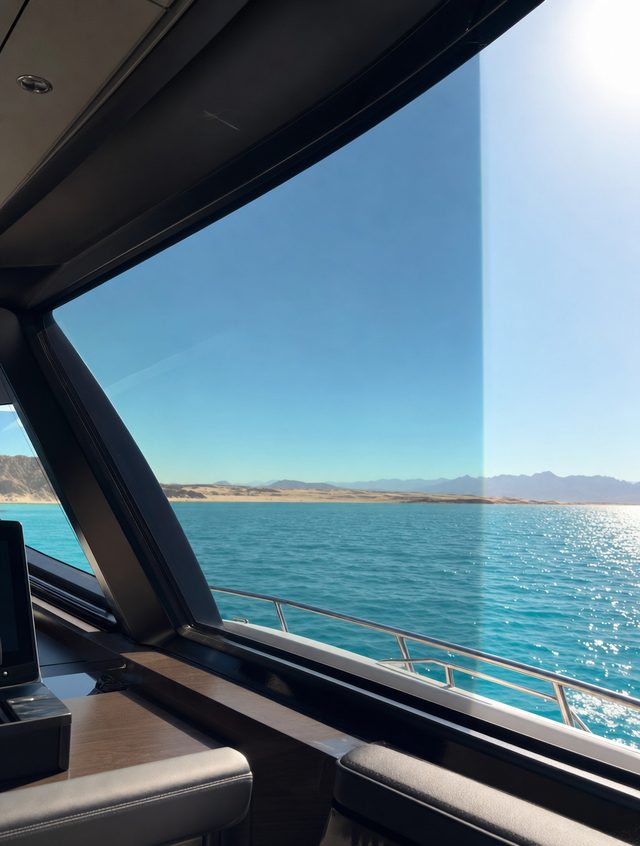
Marine tint is a specialist film for helm and cabin glass. It reduces solar heat and glare, blocks the UV that fades interiors, and adds privacy — tuned for marine glass and the salt environment.
It is not automotive tint. The film, the shades and the installation are all chosen for the realities of a vessel exposed to sun and sea.
How it works
The process.
Assess glass & goals
We review the glass types and what you want — heat, glare, privacy or all three.
Select the film
A marine-grade film and shade matched to the helm and cabin.
Prep & apply
Glass is cleaned and the film applied for a clean, bubble-free finish.
Heat-set & inspect
Heat-set and inspected for clarity and a precise edge.
What's included
In every marine tint engagement.
A clear scope, a marine-grade standard, and honest expectations set at inspection.
- Glass assessment & goals
- Marine-grade window film
- Precision application
- UV and solar-heat reducing layer
- Reduced helm glare
- Care & maintenance guidance
Who it's for
Condition fit.
Sun-exposed helms
Cruisers and fly-bridges that bake under the Red Sea sun.
Interiors from UV
Helps shield upholstery, timber and finishes from fading.
Interior care
Combine with teak & interior care for full below-deck preservation.
Questions
Marine Tint FAQ.
No. The film and the installation are marine-specific — chosen for marine glass types, curvature and the salt environment, not adapted from automotive work.
Yes. Marine tint rejects solar heat and cuts glare, which noticeably improves comfort at the helm and in the cabin.
Yes — it helps protect upholstery, timber and interior finishes from the UV that causes fading.


Start with an inspection.
- +20 1055 9900 55
- hello@aqualayereg.com
- Egypt · North Coast · Red Sea